
Quick Answer
To start a NEMT business in 2026: form an LLC, get your state transportation license and commercial auto insurance, buy or lease one to three vehicles, apply to Medicaid brokers like Modivcare, MTM, and Access2Care (approval takes 30-90 days, so start early), set up dispatch and billing, then win trips through on-time performance. Most launches need roughly $50,000-$150,000 in starting capital.
Non-emergency medical transportation keeps growing for reasons that aren't going away: Medicaid covers rides to medical appointments (federal rules at 42 CFR 431.53 require every state Medicaid agency to assure transportation to and from providers), the population is aging, and dialysis, chemotherapy, and behavioral-health visits happen whether or not a family member is free to drive. That makes NEMT one of the more durable small-business opportunities in healthcare, but it is an operations business, not a passive one. Here is the eight-step path we see work, written by a team that answers the phones and runs the dispatch boards for NEMT fleets every day.
Step 1: How do you research your NEMT market?
Before spending a dollar, learn who actually pays for rides in your state. In most states, the bulk of NEMT volume flows through Medicaid brokers: companies like Modivcare, MTM, and Access2Care that contract with the state and assign trips to transportation providers. MACPAC's NEMT overview calls the third-party broker the most common delivery model, an option states have used since the Deficit Reduction Act of 2005. Your research checklist:
- Which brokers operate in your state and counties. This decides who you'll apply to and what their provider requirements are.
- What trip types are in demand. Ambulatory, wheelchair, stretcher, and long-distance trips reimburse differently and need different vehicles.
- Who already serves your area. Look for gaps: rural counties, early-morning dialysis runs, wheelchair capacity, weekend coverage.
- Your state's licensing rules. Some states require a specific NEMT permit or certificate; others regulate through the broker's provider agreement.
Step 2: What goes in the business plan?
Keep it practical. The plan that matters covers startup costs (vehicles, insurance, licensing, technology), realistic trip-volume and revenue projections, monthly operating expenses, how you'll win broker contracts and facility referrals, and a timeline from launch to break-even. Two honest notes from the field: reimbursement arrives weeks after you complete trips, so budget working capital for the gap, and your first months will run below capacity while broker volume ramps up. Plan for both and you won't be surprised by either.
Step 3: Legal setup and licensing
Form your business entity (an LLC is the common choice), obtain your EIN, and register with your state. NEMT-specific requirements typically include:
- State transportation license or NEMT permit (varies by state)
- Commercial auto insurance, commonly $1M+ liability for broker work
- Workers' compensation insurance once you hire
- Local business licensing
- Driver requirements: background checks, drug testing, and in many states specific training such as passenger assistance and CPR/first aid
Federal minimums apply on top of state rules. CMS's Medicaid Transportation Coverage Guide spells out driver standards states must enforce: valid driver's licenses, screening against federal exclusion lists, and disclosure of driving history and traffic violations.
Insurance is usually the biggest recurring shock for new owners. Get real quotes for your actual vehicles and drivers before you commit to a fleet size.
Step 4: How should you build your first fleet?
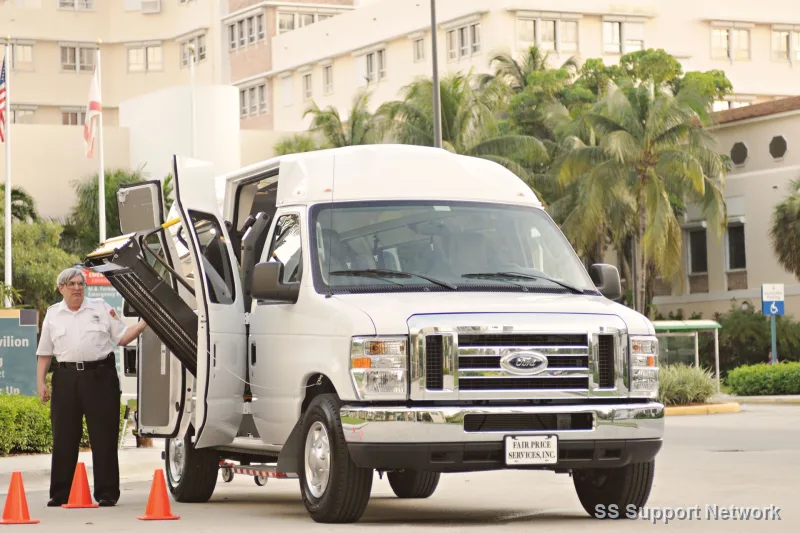
Match vehicles to your market research. Wheelchair-accessible vehicles (WAVs) command higher reimbursement per trip but cost more to buy and maintain; ambulatory sedans and minivans handle high-volume, lower-rate trips. Many successful launches start with a mix, one WAV plus one or two ambulatory vehicles, to balance volume and revenue. Typical ranges we see owners budget:
| Startup item | Typical range |
|---|---|
| Wheelchair van (used to new) | $35,000 to $55,000 |
| Ambulatory sedan or minivan | $15,000 to $30,000 |
| Commercial auto insurance (annual) | $8,000 to $15,000 per vehicle class |
| Licensing & permits | $1,500 to $3,000 |
| Dispatch software or outsourced dispatch | $200 to $500+/month |
These are market ranges, not quotes. Your state, vehicle condition, and driving records will move every line. The point of the table is proportion: vehicles and insurance dominate, so mistakes there hurt most.
Step 5: Technology and operations
At minimum you need a way to take trips, assign them, prove they happened, and bill them. That means NEMT dispatch software or an outsourced dispatch partner, GPS tracking, electronic trip verification, billing capability, and a phone line that a human actually answers. This is the layer where solo owners burn out first: the phone rings at 4:45 a.m. when a driver calls in sick, and again at 9 p.m. when a facility needs a will-call pickup. Decide early whether you'll staff that yourself or hand it to a 24/7 dispatch team that works inside your software. Outsourcing dispatch and billing from day one is how many small launches keep fixed overhead near zero. See the full NEMT back-office services for what that can cover.
Step 6: Credentialing and broker enrollment
Start broker applications as early as your insurance and vehicles allow, because approval commonly takes 30-90 days and you cannot bill broker trips until you're in-network. Each broker has its own requirements for documentation, insurance minimums, vehicle inspections, and driver files. Missing one document restarts the clock, which is why many owners hand this to a credentialing specialist. Apply to more than one broker. Depending on a single trip source is the most common structural weakness in young NEMT companies.
Launching a NEMT company?Get a free operations audit: dispatch, billing, and credentialing scoped in writing within 1 business day.
Get My Free AuditStep 7: Hire and train drivers
Your drivers are your product. Hire for clean records and patience, run thorough background checks, and train on patient interaction, HIPAA basics, wheelchair securement, vehicle safety, and trip documentation. A driver who is five minutes early, greets the rider by name, and documents the trip correctly is worth more to your broker scorecard than any marketing you will ever buy. Keep your own role focused on fleet and driver quality; administrative work like scheduling, confirmations, and paperwork can go to a healthcare virtual assistant for a fraction of an office hire's cost.
Step 8: Launch, measure, and scale
Start with trip volumes you can complete flawlessly. Brokers watch on-time performance, complaint rates, and documentation quality. A strong first 90 days earns volume increases faster than any sales call. From there, scaling is a rhythm: add a vehicle when demand proves it, add a broker when your scorecard supports it, and add back-office capacity before the phones outgrow you. One of our clients followed exactly this arc from a single state to a multi-state operation, and the case study shows what the back office behind that looked like.
How much does it cost to start a NEMT business?
Most NEMT startups need roughly $50,000 to $150,000 in initial capital. The low end is achievable if you start with two or three used vehicles, keep an office out of the budget, and outsource dispatch and billing instead of hiring staff. The high end comes with new WAVs, larger fleets, and in-house staffing. Before you commit, run your own numbers. The ROI calculator compares in-house staffing against outsourced support using your volumes, and our pricing page shows what outsourced coverage actually costs per month.
The honest conclusion
Starting a NEMT business in 2026 is a genuine opportunity, not a get-rich scheme. The winners are operators: they keep vehicles rolling, drivers happy, brokers confident, and paperwork clean. Follow the eight steps, protect your working capital, and treat reliability as the product. Everything else (growth, better broker contracts, private-pay referrals) follows from that reputation.
Frequently asked questions
To start a NEMT business in 2026: form an LLC, get your state transportation license and commercial auto insurance, buy or lease one to three vehicles, apply to Medicaid brokers like Modivcare, MTM, and Access2Care, then set up dispatch and billing and win trips through on-time performance. Broker approval takes 30 to 90 days, so start early.
Most NEMT startups need roughly $50,000 to $150,000 in starting capital. The low end is achievable with two or three used vehicles, no office, and outsourced dispatch and billing instead of hired staff. The high end comes with new wheelchair-accessible vans, larger fleets, and in-house staffing. Vehicles and insurance dominate the budget.
NEMT broker enrollment commonly takes 30 to 90 days, and you cannot bill broker trips until you are in-network, so start applications as early as your insurance and vehicles allow. Each broker sets its own requirements for documentation, insurance minimums, vehicle inspections, and driver files. Missing one document restarts the clock, so apply to more than one broker.
In most states, the bulk of NEMT volume flows through Medicaid brokers like Modivcare, MTM, and Access2Care, which contract with the state and assign trips to transportation providers. Research which brokers operate in your counties, since that decides who you apply to and what their provider requirements are. Depending on a single broker is a common structural weakness.
Match vehicles to your market. Wheelchair-accessible vehicles command higher reimbursement per trip but cost more to buy and maintain; ambulatory sedans and minivans handle high-volume, lower-rate trips. Many successful launches start with a mix, one WAV plus one or two ambulatory vehicles, to balance volume and revenue. Get real insurance quotes before committing to fleet size.