
Quick Answer
NEMT back office support covers everything beyond driving: billing and claims, credentialing and broker enrollment, dispatch coordination, compliance documentation, bookkeeping, and patient communication. Small operators (roughly 5-30 vehicles) rarely generate enough work to justify a full-time hire for each function, so the practical answer is a bundled outsourcing partner providing each specialty on a fractional basis, at typically 35-70% below fully-loaded in-house cost (SS Support Network operations data).
Small NEMT operators live inside a staffing paradox. Every back-office function (billing, credentialing, compliance, bookkeeping, phones) genuinely needs professional attention, but none of them generates a full-time workload at 5-30 vehicles. Hire for each and payroll swallows the margin; skip them and the owner becomes the billing clerk, credentialing coordinator, and night dispatcher all at once. This guide covers what the back office actually includes, why it squeezes small fleets hardest, and how the fractional model solves it.
What Does NEMT Back Office Support Include?
Everything operational that is not driving a vehicle, the paperwork-and-phones layer that decides whether the driving actually gets paid:
- Billing and claims management: clean submission, denial work, and follow-through to payment; the heart of revenue cycle management
- Credentialing and broker enrollment: applications, renewals, and the paperwork brokers demand before and after they assign you trips
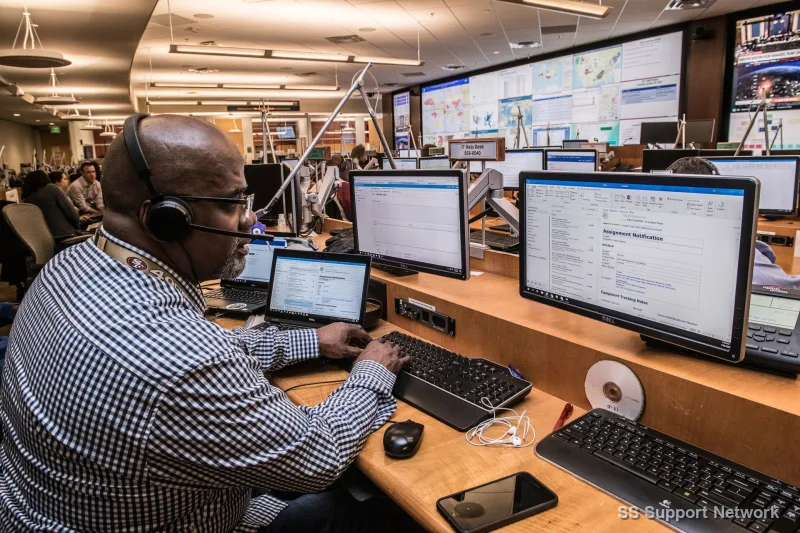
- Dispatch and scheduling coordination: trip intake, driver assignment, and day-of management
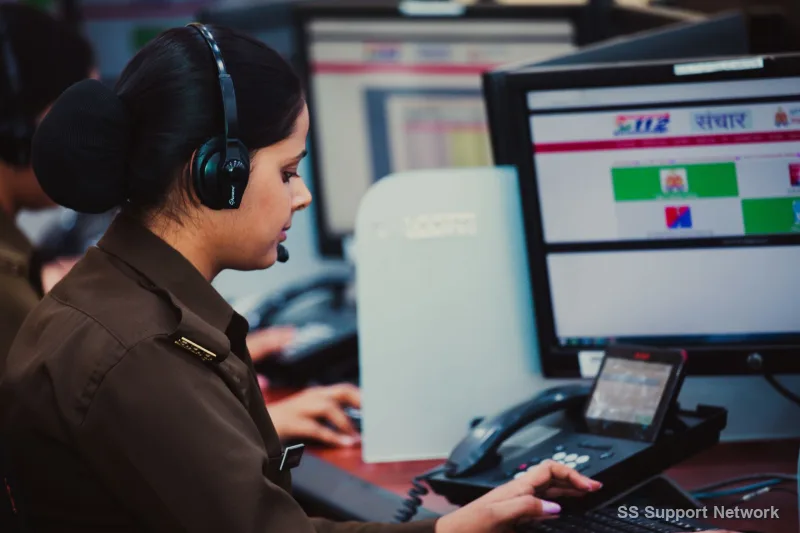
- Patient and customer communication: confirmations, will-calls, complaints, and callbacks, answered in your name
- Compliance documentation: driver files, vehicle records, and monitoring so renewals never lapse
- Bookkeeping and financial reporting: reconciliation and the numbers that tell you whether trips are actually profitable
- Reporting and analytics: trip, revenue, and performance visibility owners rarely have time to build themselves
Why Is This Harder for Small Operators?
Because the workloads come in fractions. A 10-vehicle operation produces enough billing to keep a specialist busy maybe half the week, enough credentialing for a few hours, enough bookkeeping for a day. No function disappears. Claims still deny, credentials still expire, phones still ring at night, but none justifies a salary.
So owners default to doing it themselves, and the results are predictable: billing runs late and leaks revenue, a credential renewal slips and a broker suspends assignments, the after-hours phone becomes the owner's phone, and growth stalls, not for lack of demand, but because the administrative layer is already at capacity. The most expensive version of the back office is the one the owner runs personally at midnight.
How Does Outsourcing Solve the Fractional Problem?
A bundled back-office partner staffs each function with specialists and sells you exactly the fraction you need. Your billing is worked daily by people who bill NEMT all day; your credentialing calendar is watched by someone who tracks fifty of them; your phones are answered around the clock without you staffing a single shift. The economics work because the partner spreads specialist capacity across many fleets: you pay for output, not for idle hours.
Bundling adds a second, underrated advantage: context. When the same team runs your dispatch, calls, and billing, the agent answering a rider call can see the trip board, and the biller working a claim knows the trip's history. Nothing falls into the gaps between vendors, because there are no gaps.
What stays with you is just as important as what leaves: vehicles, drivers, safety, local facility relationships, and final say on every business decision. A good partner runs the administrative layer inside your systems and your rules, so you keep visibility of every trip, claim, and call, and you can audit any of it whenever you like.
Running the back office yourself at midnight?Free operations audit: we will show you what to hand off first, within 1 business day.
Get My Free AuditHow Do You Choose a Back Office Partner?
Five filters separate real partners from resellers:
- Bundled services: dispatch, billing, and credentialing under one roof, so nothing falls between vendors
- Specific experience with small NEMT operators, not just enterprise accounts
- HIPAA-trained agents with a BAA available in writing
- Transparent reporting: you should see trips, claims, and calls without asking
- Flexible terms: month-to-month beats lock-ins from a partner still proving itself
And one question that shortcuts the rest: how long has your longest client stayed? Retention is the realest metric in this business. Our flagship NEMT client has kept their complete back office with us for over two years while expanding from one state to multi-state. The whole account is in the case study.
What Should You Hand Off First?
Almost nobody outsources the whole back office in one move, and they should not. The sequencing that works, in the order most small operators run it:
- 1Phones and after-hours dispatch. Highest pain, fastest relief: the owner stops being the night desk in week one, and riders stop reaching voicemail.
- 2Billing. The revenue engine. Once claims are worked daily by specialists, cash flow steadies, which funds everything else on this list.
- 3Credentialing and compliance. Lower volume but catastrophic when missed; putting renewals on a professionally watched calendar removes the worst tail risk in the business.
- 4Bookkeeping and reporting. Last because it hurts least, but once added, the owner finally sees per-trip profitability instead of guessing at it.
Each handoff should prove itself before the next begins. A partner confident in its work will welcome that staging; a partner that pushes for everything at once, on a long contract, before earning anything, has told you what you need to know.
What ROI Should You Expect?
The direct saving is the easy part: fractional specialists cost typically 35-70% less than the fully-loaded in-house equivalent (SS Support Network operations data). Run your own numbers in the savings calculator. But small operators usually feel the indirect returns harder:
- Faster, cleaner collections: claims worked daily instead of when the owner finds an evening
- No lapsed credentials: renewals tracked professionally instead of remembered occasionally
- Better broker scores: phones answered 24/7 and portals kept clean
- The owner's week back: twenty-plus hours of administration converted into fleet, driver, and growth time
That last line is where small fleets stop being small. Administrative capacity is usually the real growth ceiling, not vehicles, not demand, and it is the cheapest ceiling to remove. When the ceiling lifts, the same owner who was drowning in paperwork suddenly has bandwidth to chase the next broker contract or the next county. Scope-based rates are on the pricing page.
The Bottom Line
Back-office support is not a big-company luxury. Small operators arguably gain more from it, because every leaked claim and lapsed credential hits a small fleet proportionally harder. The fractional model exists precisely for the 5-30 vehicle operator: professional billing, credentialing, dispatch, and phones, at the fraction of a workload you actually generate. The right partner becomes the operational backbone that lets a small fleet compete with companies many times its size.
Frequently asked questions
NEMT back office support covers everything beyond driving the vehicle: billing and claims management, credentialing and broker enrollment, dispatch and scheduling coordination, patient and customer communication, compliance documentation, and bookkeeping with financial reporting. It is the paperwork-and-phones layer that decides whether completed trips actually get paid and whether credentials stay current.
Fractional NEMT back-office support typically costs 35-70% less than the fully-loaded in-house equivalent (SS Support Network operations data), because a partner spreads specialist capacity across many fleets and you pay for output rather than idle hours. Pricing usually scales with the scope and volume you actually need instead of a fixed salary.
Small fleets of roughly 5-30 vehicles usually outsource, because no single back-office function generates a full-time workload at that size. A 10-vehicle operation produces maybe half a billing job and a few hours of credentialing a week, not enough to justify separate salaries. Fractional specialists deliver each function without paying for idle time.
Hand off phones and after-hours dispatch first, since that relieves the highest pain fastest and stops the owner being the night desk. Billing usually comes second to steady cash flow, then credentialing and compliance to remove tail risk, and bookkeeping last. Each handoff should prove itself before the next one begins.
Choose a partner offering bundled dispatch, billing, and credentialing under one roof, genuine small-fleet experience, HIPAA-trained agents with a BAA available in writing, transparent reporting you can check unprompted, and flexible month-to-month terms. One shortcut question outperforms the rest: how long has your longest client stayed? Retention is the realest metric in this business.