Quick Answer
NEMT software gives you a dispatch platform, but you still hire, train, and schedule the dispatchers who use it. Outsourced dispatching gives you trained people working inside a platform, usually yours, with 24/7 coverage included. For fleets under roughly 80-100 trips per day, outsourcing usually costs less all-in. Larger fleets often do best with a hybrid: software-driven daytime dispatch, outsourced nights and weekends.
This is one of the most debated buying decisions in NEMT, and it is frequently framed wrong. Software and outsourcing are not two versions of the same product. One is a tool, the other is a staffed function. The honest comparison is between software plus the staff to run it and an outsourced desk. Framed that way, the answer usually becomes obvious for your size of fleet.
What Does NEMT Software Actually Give You?
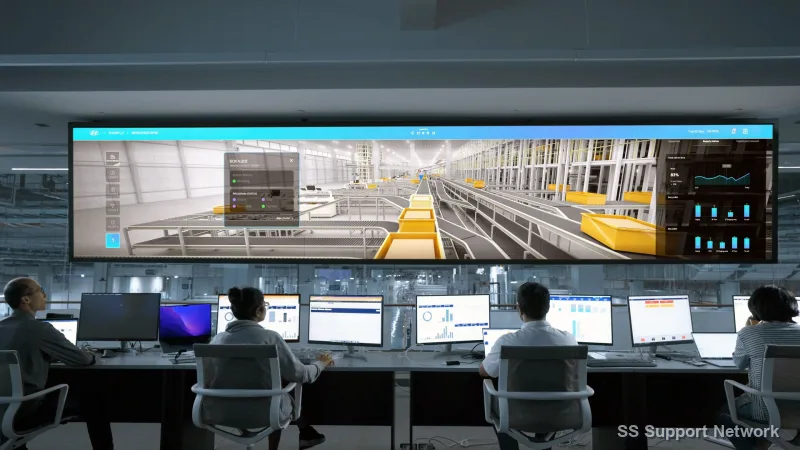
Dispatch software provides the technology layer: trip management, vehicle tracking, driver apps, route optimization, electronic trip verification, broker portal integration, and billing hooks. Good platforms genuinely improve dispatcher productivity and are increasingly mandatory: most major brokers now expect electronic verification and GPS data from their providers.
The strengths: direct control of your operation, customizable workflows, full data ownership, and internal expertise that compounds over time.
The catch: software subscriptions commonly run $500-2,000+ per month, and the platform dispatches nothing by itself. You still need trained people in the chairs, including nights, weekends, and holidays, plus someone to handle training, updates, integrations, and troubleshooting. The software line on your budget is the small line; the people line is the big one, as our in-house cost comparison shows in detail.
What Does Outsourced Dispatching Give You?
An outsourced dispatch service provides the staffed function: trained NEMT dispatchers, 24/7/365 coverage, quality monitoring, and reporting, typically working inside whatever software you already use, so you keep full visibility of every trip.
The strengths: lower total cost for small and mid-size fleets, instant around-the-clock coverage, zero hiring and training burden, and capacity that scales up or down in days. You also inherit the provider's experience across many NEMT operations: patterns one fleet alone takes years to learn.
The trade-offs: less minute-to-minute control over individual dispatch decisions, a communication rhythm you have to establish early, and reliance on a partner for a critical function, which is why provider selection and proof of retention matter so much.
How Do the Two Options Compare?
| Factor | Software only | Outsourced dispatching |
|---|---|---|
| Monthly platform cost | $500-2,000+ | Works inside your existing platform |
| Dispatchers | You hire, train, schedule | Included, trained on NEMT |
| 24/7 coverage | Extra staff cost | Included |
| Setup time | Typically 1-4 weeks plus staff training | Live in 5-10 business days |
| Turnover risk | Yours | Provider's |
| Quality assurance | Self-managed | Included |
| Scaling capacity | Hire more staff | Add coverage in days |
| Control | Full | Shared via your software and SLAs |
The break-even logic: below roughly 80-100 trips per day, the fixed cost of staffing software properly is hard to justify, and outsourcing nearly always wins on total cost. Above that volume, in-house staffing starts to amortize, which is where the hybrid enters. Run your own volumes through the savings calculator to see where you land.
Already have software you like?We dispatch inside it. Free operations audit, with a written plan within 1 business day.
Get My Free AuditWhat Is the Hybrid Model?
Increasingly, growing NEMT companies refuse to choose. They run software-driven, in-house dispatch during peak daytime hours, when volume is highest and management is present, and hand nights, weekends, holidays, and overflow to an outsourced partner working in the same platform.
The hybrid captures the best of both: daytime control and internal expertise, without paying four salaries to cover the quiet hours. It also removes the single most fragile point of any in-house desk: the 2 a.m. shift nobody wants, staffed by whoever could be found. Because the partner works inside your software, handoffs at shift change are a login, not a data migration.
A typical hybrid in practice: your lead dispatcher owns the board from 6 a.m. to 6 p.m. on weekdays, working in your platform with full authority over assignments. At 6 p.m., the partner team logs into the same platform, works the same trips under the same rules, and leaves shift notes your dispatcher reads over coffee. Weekends and holidays run the same way. You keep the operating knowledge and daytime judgment you have already paid to build, while the expensive, brittle hours (nights, weekends, sick days) become the partner's staffing problem instead of yours. Many fleets that start hybrid eventually hand over more; almost none go back to staffing three shifts.
What Should You Ask Each Vendor Before Deciding?
The fastest way to make this decision well is to interrogate both options with the questions that expose their true cost and fit.
Ask the software vendor:
- What is the all-in monthly cost at my trip volume: licenses, seats, modules, support?
- Which of my brokers do you integrate with directly, and how mature is each integration?
- How long does implementation and staff training realistically take for a fleet my size?
- What happens to my dispatch operation when the platform has an outage at 7 a.m.?
Ask the dispatch provider:
- Will your team work inside my existing software, and who has worked in it before?
- Is your after-hours coverage genuinely staffed, or an answering layer with escalation?
- What do your reports show me weekly, and how quickly can I audit any single trip?
- How long has your longest NEMT client stayed, and can I speak with a reference?
Notice that the two question sets converge on the same themes: total cost, broker fit, coverage, and accountability. Whichever option answers them more convincingly for your fleet is the right one, regardless of which column it sits in.
Which Should You Choose?
- Small fleets (under ~30 trips/day): outsource. The economics are not close, and your time is worth more on brokers and drivers than on the dispatch board.
- Mid-size fleets (~30-100 trips/day): outsourcing usually still wins all-in, but a hybrid becomes viable if you already employ a strong daytime dispatcher you want to keep.
- Large fleets (100+ trips/day): software plus in-house staff amortizes, and a hybrid for after-hours coverage typically still beats staffing three shifts.
Whichever route you take, judge vendors and partners the same way: by what they can prove. Our flagship NEMT client has run their complete back office with us for over two years, inside their own software, through a one-state-to-multi-state expansion. The full account is in the case study, and per-model rates are on the pricing page.
The Bottom Line
Software versus outsourcing is a false choice for most fleets. The real question is who staffs the platform, and at what fully-loaded cost. Small and mid-size operators almost always come out ahead outsourcing the whole desk. Large operators come out ahead owning the daytime and outsourcing the night. Evaluate both against your actual trip volume, not against assumptions, and the decision tends to make itself.
Also worth reading: Best NEMT Provider Solutions and Outsourced Call Center Options.
Frequently asked questions
For fleets under roughly 80-100 trips per day, outsourced dispatching is usually cheaper all-in because software still requires you to hire, train, and schedule dispatchers around the clock. Outsourcing typically runs 35-70% below fully-loaded in-house cost (SS Support Network operations data). Larger fleets often amortize in-house staffing better.
Yes. A good outsourced dispatch team works inside whatever platform you already use, so you keep full visibility of every trip and own all your data. You avoid a migration, and shift handoffs become a login rather than a data transfer. SS Support Network dispatches inside clients' own software.
The hybrid model keeps in-house dispatchers on the board during peak daytime hours and hands nights, weekends, holidays, and overflow to an outsourced partner working in the same platform. It preserves daytime control and internal knowledge while removing the fragile late shifts, usually costing less than staffing three full shifts in-house.
No. Dispatch software is a tool, not a staffed function; it manages trips, tracking, and billing hooks but dispatches nothing on its own. You still need trained people in the chairs, including nights, weekends, and holidays, plus someone to handle training, integrations, and troubleshooting. The people line is the larger budget item.
Outsourced NEMT dispatching typically goes live in 5-10 business days, since the provider brings trained dispatchers rather than requiring you to recruit and train new staff. Buying and implementing software plus hiring dispatchers usually takes weeks to months. SS Support Network has run broker workflows for Modivcare, MTM, and Access2Care since 2020.