
Practice Support
Call Center Services for Chiropractic Clinics
Chiropractic runs on repeat visits. A patient who drops out of a treatment plan rarely announces it, and nobody notices until the schedule is thin.

The Treatment-Plan Phone, In Short
Chiropractic revenue lives or dies on completed treatment plans, not single appointments. So this call center works as a retention desk rather than a message service: new patient calls answered live, plan visits booked and rebooked, and outbound calls to the patients who have quietly fallen out of a plan. That last list is the money. A patient who misses two visits in a row and never hears from you has usually ended their care without telling anybody, and nothing on your schedule will flag it. Billing is hourly per agent, and it covers the evenings and weekends when people in pain actually pick up the phone.
The new patient call is the whole funnel
Chiropractic marketing spends money to make a phone ring. Everything upstream (the ads, the local search work, the reviews) exists to produce that call.
When it rings out because the adjusting room is busy, the spend is wasted, and it is wasted invisibly. The front desk phone is where relationships start, and when it stalls through understaffing the whole practice slows with it.
Answering it live is the cheapest marketing improvement available to most clinics, because it does not increase the number of calls at all.
Treatment plans need somebody watching
A patient on a twelve-visit plan who attends nine has not made a decision. They had a busy fortnight, felt better, and drifted.
We watch the plan rather than the calendar: who is behind, who missed twice, who has three visits left and nothing booked. Then we call them, in your clinic's name, before the drift becomes permanent.
- New patient calls answered live: including evenings and weekends, when people in pain search.
- Plan scheduling: the whole course booked, not one visit at a time.
- Drop-off calls: patients behind on their plan, contacted early.
- No-show follow-up: same day, while the slot can be refilled.
- Reactivation: patients discharged months ago who are due a check. See reactivation.
What we do not do
We do not discuss clinical findings, offer advice on symptoms, or tell a patient what their treatment should be. Those are yours.
We do not quote insurance coverage. We confirm participation and capture the plan, and anything beyond that waits for somebody in the clinic who can see the benefits.
There is one boundary worth stating on its own, because it is the question a chiropractic front desk is asked most often and is least equipped to answer. A Medicare patient who has been coming for a while will eventually ask whether the next visit is still covered. Medicare pays for spinal manipulation only while the care is active and corrective, and once a practitioner determines the patient has reached maximum therapeutic benefit the visits become maintenance care, which Medicare does not cover. That determination is clinical, it belongs to the practitioner, and it has paperwork attached to it in the form of an Advance Beneficiary Notice signed before the visit. So the answer our agents give is that the practitioner will confirm it, and the call is put in front of you. An agent who guesses at that question either costs the patient an unexpected bill or costs you a visit you could have delivered properly.
The sequence of a chiropractic new patient call
This is the call every marketing dollar was spent to produce. It is also the call most likely to be answered badly, because it usually arrives while somebody is in the adjusting room.
- 1
Find out whether this is pain today or a problem in general
A caller in acute pain wants the soonest appointment and will take an awkward time to get it. A caller with a long-standing complaint is comparing clinics and wants to know how you work. The same script for both loses one of them: the acute caller is put off by an intake interview, and the shopping caller is put off by being booked before they have asked anything. Our agents establish which one they have in the first thirty seconds and run the call accordingly.
- 2
Identify a personal injury case at the first call, not the third
If there was an accident, the details are needed while the caller has them in front of them: date of the accident, whether a police report exists, the insurer and claim number, the adjuster, and whether an attorney is already involved. Chasing those afterwards takes two more phone calls and the caller is markedly less willing by then. This is also the point at which your clinic decides whether it wants the case at all, so the facts go to you before the appointment is confirmed if that is your rule.
- 3
Book the exam slot, not an adjustment slot
A new patient needs the longer appointment with the practitioner's exam time in it. Dropping one into a routine adjustment slot compresses the visit that decides whether the patient commits to a plan at all, which is an expensive way to save fifteen minutes of diary. Agents book to your appointment types and durations, and where the correct slot is not available they offer the next one that is rather than substituting a shorter one.
- 4
Answer the cost question without quoting cover
Almost every new patient asks what it costs. We give the fee for the initial visit from the figure you publish to us, and we confirm whether you participate with their plan. We do not estimate their share, their deductible or their visit limit, because those are the numbers that create a dispute at the front desk later.
- 5
Confirm in writing and put the record where you will see it
Appointment confirmed by the channel the patient prefers, the intake captured against the record in your system, and anything the practitioner should read before walking in flagged. Your clinic opens the day already knowing who is new and why they are coming.
Watching the plan instead of the calendar
Retention work only happens if somebody has written down what triggers a call. This is the ladder we work to unless your clinic wants a different one, and it is deliberately boring.
| What the plan shows | What happens | Why this point |
|---|---|---|
| Visit missed, no rebook | What happensCalled the same day, slot offered from the remaining plan | Why this pointA single miss is an accident. It becomes a decision only if nobody notices it |
| Two consecutive misses | What happensCalled and flagged to the practitioner | Why this pointThis is the point at which patients stop coming without ever saying so. Almost all silent drop-off is visible here first |
| Plan running behind schedule | What happensRemaining visits rebooked as a block, not one at a time | Why this pointA plan booked visit-by-visit ends whenever the patient forgets to rebook, which is usually well short of the course |
| Three or fewer visits left, nothing booked | What happensCalled to complete the course and to discuss what follows it | Why this pointThe end of a plan is the natural review point, and it is the conversation that is skipped when the desk is busy |
| Discharged some months ago | What happensReactivation call in your clinic's name | Why this pointA discharged patient is not a lost one, but they will not return unprompted once the pain that brought them has gone |
What does a chiropractic call center cost?
You buy hours, not a headcount. Cover is priced per agent per hour with no per-call charge and no setup fee, and evenings and weekends carry no premium, which matters more in chiropractic than in most specialties because that is when people in pain go looking for a chiropractor.
The comparison worth running is not against a receptionist's salary alone. One full-time front desk person cannot answer evenings, cannot answer weekends, and does not work the drop-off list on a busy afternoon, so the in-house option is not the same product at any price. Add payroll taxes, benefits, paid leave, cover during that leave and the recruiting weeks between hires, then compare. Typical savings run 35-70% against fully loaded in-house cost (SS Support Network operations data). Our rates are published on the pricing page and the savings calculator takes your own wage figures.
On the ground
Nine of twelve, and nobody called
A single-practitioner clinic pulled a year of treatment plans and looked at completion. The average plan finished at nine visits out of twelve, and almost none of those patients had been contacted after they stopped attending. Three visits of unbilled care per patient, across a year of patients, was larger than the clinic's entire marketing budget.
Asked and answered
Chiropractic call handling, answered straight
Yes, with your appointment types and durations. New patient exams and routine adjustments are different lengths and are booked as such.
Yes, and it is usually where the return is. The call goes out in your clinic's name, early enough to matter, and the response comes back to the same desk.
No. Clinical questions go to you. Agents are trained to take the question, say plainly that the practitioner will answer it, and get it in front of you.
Yes. People search for a chiropractor when the pain is bad, which is disproportionately evenings and weekends, and a live answer at that moment converts far better than a callback on Monday.
Participation confirmed, plan captured, nothing quoted. Coverage estimates given on the phone are how a patient arrives expecting a different number than the one on the invoice.
Yes. SS Support Network agents run your personal injury intake on the first call, while the caller still has the paperwork in front of them: date of the accident, whether a police report exists, the insurer and claim number, the adjuster, and whether an attorney is already involved. Those are the fields an attorney or adjuster asks for months later, and collecting them at the first contact saves two follow-up calls at a point when the patient is far less willing to take them. If your clinic screens personal injury cases before accepting them, the intake goes to you for a decision before the appointment is confirmed.
No, and this is a boundary we hold deliberately. Medicare covers chiropractic spinal manipulation only while the care is active and corrective; once the practitioner determines a patient has reached maximum therapeutic benefit, further visits are maintenance care, which Medicare does not cover and which requires a signed Advance Beneficiary Notice before the visit. That determination is clinical and belongs to your practitioner. SS Support Network agents say plainly that the practitioner will confirm it and put the question in front of you, because an agent guessing at that answer either hands the patient an unexpected bill or costs you a visit you could have delivered correctly.
On a written trigger rather than when somebody remembers. The default ladder SS Support Network works to calls a missed visit the same day, calls and flags to the practitioner after two consecutive misses, rebooks a lagging plan as a block instead of one visit at a time, calls when three or fewer visits remain with nothing booked, and runs a reactivation call for patients discharged some months earlier. Two consecutive misses is the point that matters most: it is where silent drop-off becomes visible, and it is invisible on a calendar that only shows what is booked.
Less than a front-desk hire, because you buy hours instead of a salary plus payroll taxes, benefits, PTO cover and recruiting. Run it on your own wage figures in the savings calculator. The comparison also flatters in-house staffing, since one receptionist cannot cover evenings and weekends at any price.
Something here we did not cover? Call +1 (657) 777-0006, 24/7.
Adjacent services
Nearby desks for a practice phone
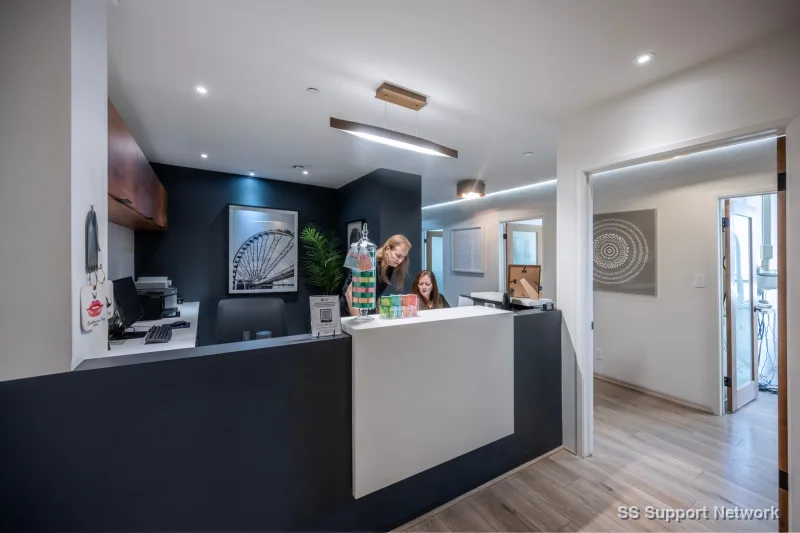
Dental Call Center
New patient calls answered live, plus scheduling, recall and no-show follow-up.
Learn more
Patient Reactivation, Recall & No-Show Recovery
Win back lapsed patients and rebook no-shows.
Learn more
Patient Scheduling
Same-day slots and reservations booked, confirmed, and followed up on.
Learn moreFree operations audit
Find out how many plans are quietly ending early
Tell us roughly how many active treatment plans you carry and who calls the patients who drop off. Within 1 business day you'll have a written coverage plan (call hours, the drop-off rule we would work to, and the cost) with no sales pressure.
Prefer to talk now? Call +1 (657) 777-0006 or WhatsApp us. We answer 24/7.