
Home Care Support
Home Care & Home Health Answering Service
The call that matters at two in the morning is a caregiver who cannot make the seven o'clock visit. Somebody has to answer it, work out who can cover, and make sure a patient is not left waiting.
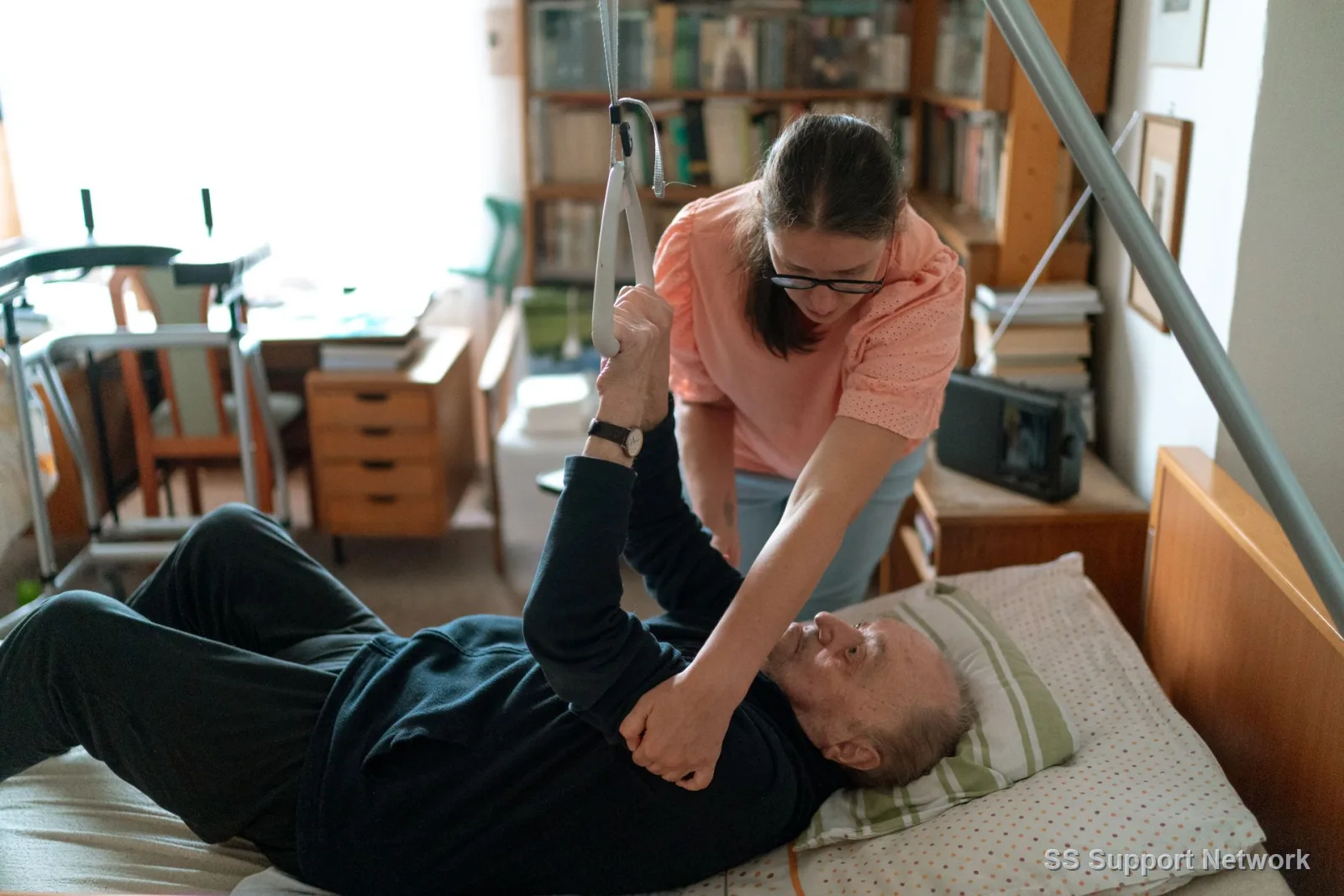
Five Calls, Two That Matter Most
Out of hours, a home care agency's phone carries five kinds of calls: a patient emergency that must reach the on-call clinician immediately, a caregiver calling out of a shift, a new referral that has to be captured completely, a family question, and routine admin. A home care answering service routes each one to its lane. The job is really about the first two. A call-out that slips becomes a missed visit, and an emergency that slips becomes an incident. Everything else is bookkeeping by comparison.
Five calls, five different answers
Home care after-hours work is often described as "taking messages". It is not. The calls that arrive have almost nothing in common with each other, and treating them the same way is what produces a folder of voicemails for somebody to sort out at eight in the morning.
- Patient emergency. Routed immediately to your on-call clinician, by your rules, with the call recorded and the handoff timestamped.
- Caregiver call-out. The shift is logged, the coordinator is reached, and the gap is visible before the visit is due rather than after it is missed.
- New referral. Captured in full while the referrer is on the phone, because a discharge planner will not call back twice. See intake and referral.
- Family question. Answered where we can, routed where we cannot, and never guessed at.
- Routine admin. Supply requests, visit confirmations, schedule checks, dealt with and logged.
Call-outs are a staffing problem, not a message
When a caregiver calls at half past five to say they cannot make a morning visit, the useful thing is not a message. It is the next caregiver on the phone.
We work from whatever coverage list you give us (by client, by geography, by qualification) and start calling. You decide how far down the list we go before we wake somebody up. By the time your coordinator sees it, the shift is either covered or has a name against it and a reason.
This is the same work as shift replacement and caregiver scheduling, run out of hours.
Referrals do not wait until Monday
Hospital discharges do not observe office hours, and a discharge planner with a patient to place calls until somebody picks up. The agency that answers gets the referral.
We capture the full intake while they are on the line: the referrer and their callback, the patient, the payer, the level of care, the start date, and whatever else your admissions team needs to act on Monday morning without a second call.
It goes to your team in the format you use, not as a voicemail somebody has to transcribe.
A worked example
The Sunday night that used to cost three visits
A home health agency with sixty caregivers was losing two or three Monday morning visits every week to Sunday evening call-outs that nobody saw until the office opened. Moving the call-out line to a live desk did not reduce the number of call-outs at all. It moved the discovery of them twelve hours earlier, which was enough for a coordinator to cover almost all of them.
The fine print
Home care answering, answered straight
Yes, before any call is taken. A home care answering service handles protected health information from the first sentence of the first call, so a signed BAA and HIPAA-trained agents are the baseline rather than an upgrade.
We reach them. Emergency calls follow your escalation ladder (first number, second number, then the named backup) until a person answers and acknowledges the handoff. The time of the handoff and who took it are recorded.
Yes, and it is usually the reason agencies call us. Give us the coverage list and the rules about who can go to which client, and we work the list. You set how far we go before escalating to a human at your end.
It is captured in full and sent to your admissions team the way you want to receive it. Discharge planners call down a list until someone answers, so the agency that picks up is often the agency that gets the patient.
They answer in your agency's name with your greeting. Families and referrers should not be able to tell that the call left your building, and they generally cannot.
Yes: clock-in failures, missed visit verification, device problems. We work to your policy and escalate what needs a supervisor. See EVV support.
Both are covered, with different protocols. Assisted living has its own page (see assisted living answering) because the call mix is genuinely different.
Something here we did not cover? Call +1 (657) 777-0006, 24/7.
Next steps nearby
Where home care answering hands off

Shift Replacement & Call-Outs
While the bench grows, call-outs still get covered, 24/7, by written rules.
Learn more
Caregiver Scheduling
New hires flow straight into schedules built and maintained by the same team.
Learn more
Intake & Referral Coordination
The home health & NEMT version: answer discharge-planner referrals first and start care fast.
Learn moreFree operations audit
Put your after-hours gap in front of us
Tell us how many clients you serve and what happens to your phones after five. Within 1 business day you'll have a written after-hours plan (coverage hours, escalation rules and the cost) with no sales pressure.
Prefer to talk now? Call +1 (657) 777-0006 or WhatsApp us, 24/7.