
Dispatch Services
24/7 Emergency Dispatch Outsourcing
Overnight dispatch is a staffing problem disguised as an operations problem. One person alone at 3am is either asleep, overwhelmed, or expensive.

Nights, Covered by Arithmetic
One number explains this service: 4.2. That's how many full-time people it takes to keep a single seat staffed around the clock before anybody takes a day off, and it's why almost every operation that tries to run nights in-house retreats to an on-call rota. Outsourced 24/7 dispatch puts a staffed desk on the urgent line instead: the call taken live, your written urgency matrix applied, the right crew or technician routed from your rota, and your on-call manager brought in exactly when the protocol says to. SS Support Network runs it for medical transport, home services and field service operations, billed hourly per agent with no premium on the overnight hours you're actually buying.
The overnight maths does not work in-house
Do the arithmetic once and the whole decision becomes obvious. A week contains 168 hours. A full-time position covers 40 of them. Keeping one chair continuously occupied therefore takes 4.2 full-time people, and that is the number before anybody takes annual leave, calls in sick, attends training or leaves the company. Allow for those and it is closer to five people to keep one seat warm.
Five salaries, plus payroll taxes, plus benefits, plus whatever shift premium your market demands for unsociable hours, set against a volume of overnight calls that in most operations is a small fraction of the daytime figure. Almost nobody can justify it, so almost nobody does it. What they do instead is put the phone on an on-call rota, which is not a cheaper version of the same thing; it is a different and worse product that happens to cost less.
On-call works until it does not. The person carrying the phone is asleep, driving, or has done it for eleven nights running. The failure mode is not a dropped call, which would at least be visible. It is drift: answers get slower, decisions get looser, and nobody notices until a customer complains or a broker raises it in a review. A shared staffed desk fixes the economics from the other direction, by putting somebody who is awake and at a screen on your line without you funding a seat that is idle for six hours a night.
Three ways to cover a night, compared honestly
Including the one we lose. If your overnight volume genuinely justifies a staffed in-house desk, run it in-house.
| Compared on | On-call rota | In-house night desk | Shared staffed desk |
|---|---|---|---|
| People required | On-call rotaWhoever is willing, usually two names and often one in practice | In-house night deskAbout five full-time staff per seat, allowing for leave and sickness | Shared staffed deskNone of yours |
| State at 3am | On-call rotaAsleep, then woken, then deciding | In-house night deskAwake and at a screen | Shared staffed deskAwake and at a screen |
| Answer time | On-call rotaCall back after the phone wakes somebody | In-house night deskAnswered live | Shared staffed deskAnswered live, against a target agreed up front and reported on |
| What happens on the eleventh consecutive night | On-call rotaQuality degrades and nobody can see it happening | In-house night deskShift rotation prevents it, which is what the fifth person is for | Shared staffed deskNot applicable; the desk is staffed on shifts |
| Cost shape | On-call rotaLow salary cost, high hidden cost in turnover and complaints | In-house night deskFixed and high regardless of overnight volume | Shared staffed deskHourly, sized to the hours you actually want covered |
| Worth choosing when | On-call rotaVolume is genuinely near zero and the risk is acceptable to you | In-house night deskOvernight volume is high enough to keep a person occupied | Shared staffed deskVolume is real but not enough to fill a seat, which is most operations |
What an escalation ladder has to specify
Most operations think they have one. What they usually have is a list of names. The difference shows up at 3am, and these are the questions we make you answer before go-live.
- 1
Who is first, and does the role or the person move?
An escalation list built from names decays every time somebody leaves or swaps a shift. One built from roles, mapped to a rota you maintain, survives. We work from the rota so that "the on-call supervisor" resolves to whoever is actually on call tonight rather than to whoever held the job when the document was written.
- 2
How long before we move to the next name?
A number, in minutes, per step. Without one the agent is guessing, and the guess will be too generous at three in the morning because nobody wants to wake a second manager. With one, the ladder runs itself and the record shows exactly when each attempt was made.
- 3
Does answering count, or does acknowledging count?
These are not the same and the distinction matters more than it sounds. A manager who picks up, says they will deal with it and goes back to sleep has answered but not acknowledged. We close a step only on an explicit acknowledgement of the specific job, which is also what makes the record defensible afterwards.
- 4
What happens when the ladder runs out?
The question nobody wants to answer in advance, which is precisely why it has to be answered in advance. Dispatch anyway within a defined cost limit, hold and keep trying, stand the job down and inform the customer, or wake the owner. Any of those is a legitimate answer. Having no answer means the agent invents one at the worst possible moment, on your operation, with your customer on the line.
- 5
What does the morning read?
A written handover, in the format you specify: what came in, what was dispatched, what is still open, what needs a decision today, and every escalation attempt with its timestamp. Your day team opens a record instead of reconstructing the night from voicemails and half-remembered texts.
Your rules, applied literally
We do not exercise judgment about what is an emergency in your business. You write the matrix, we apply it, and where a call sits near a boundary we escalate rather than decide.
That sounds limiting and it is the point. A dispatcher improvising at 3am on somebody else's operation is how the wrong crew gets sent to the wrong job.
- Triage by written matrix: urgency determined by your definitions, not ours.
- Crew and technician routing: by skill, location and availability from the rota you maintain.
- Escalation ladder: first, second and backup contacts worked until a person acknowledges.
- Full call records: what was said, what was decided, who was told and when.
- Morning handover: a written summary so your day team starts informed rather than reconstructing the night.
What we cover
Medical transport and NEMT fleets, home services, field service and equipment engineering, and general commercial dispatch. The industries differ; the shape of the night does not.
For NEMT specifically the dispatch desk is a deeper service than triage alone. See NEMT dispatching and dispatch call answering.
What does overnight dispatch cost?
Hourly per agent, and specifically without an unsociable-hours premium. That last point is deliberate and worth saying out loud, because a surcharge on nights and weekends is a surcharge on the only thing you are buying. A supplier who prices overnight higher is charging you extra for the product rather than for the hours.
Set it against the arithmetic above. One seat covered continuously is roughly five people in-house; a shared desk lets you buy the twelve or sixteen hours a day you actually need covered without funding the hours nobody rings. Seasonal and partial arrangements are normal: winter only, weekends only, or cover while your own dispatcher is on leave. Typical savings run 35-70% against fully loaded in-house cost before any shift premium is counted (SS Support Network operations data). Rates are on the pricing page.
A real week
Eleven nights on the phone
An operations manager had been carrying the overnight phone personally for eleven consecutive nights when the fleet owner discovered it. Nothing had gone wrong, and that was chance rather than design. The rota had two names on it and one of them had left in March.
Asked and answered
24/7 dispatch, answered straight
Usually not. Most clients keep their daytime desk and hand us nights, weekends and holidays, which is where the staffing maths breaks down. Some move everything across once the handover proves reliable.
You write the protocol and we work it literally. Vehicle or technician types, coverage areas, escalation thresholds, who may be woken and when. We escalate rather than improvise when something falls outside it.
A written handover in the format you specify, delivered where your team already looks: what came in, what was dispatched, what is still open, what needs a decision today, and every escalation attempt with its timestamp. SS Support Network treats the handover as the deliverable rather than as admin, because the alternative is a day team reconstructing the night from voicemails and half-remembered texts, which is how overnight decisions become disputes a week later.
Around five per seat. The hard part of the arithmetic is fixed: a week has 168 hours, a full-time position covers 40, so keeping one chair continuously occupied takes 4.2 full-time people before anybody takes leave, calls in sick or resigns. Allowing for those puts it near five, plus payroll taxes, benefits and any shift premium your market demands. That is the number that pushes most operations onto an on-call rota, which is not a cheaper version of a staffed desk but a different and weaker product.
Whatever you decided in advance, which is the whole point of asking the question in daylight. The written fallback might be to dispatch anyway within a defined cost limit, to hold and keep trying, to stand the job down and inform the customer, or to wake the owner. Any of those is a legitimate answer and SS Support Network will work to it exactly. What we will not do is leave it undefined, because an undefined fallback means the agent invents one at three in the morning, on your operation, with your customer on the line. We also close each escalation step only on an explicit acknowledgement of the specific job, not on somebody merely picking up.
Yes, in whatever you already run. We are not asking you to move systems to buy overnight coverage.
The desk is staffed, not on-call, so calls are answered rather than returned. Target answer times are agreed up front and reported against.
No. Medical transport, field service, equipment engineering and home services all use it. See equipment service dispatch for the engineering variant.
Seasonal and overflow arrangements work. Some clients use us only for winter, some only for weekends, some only when their own dispatcher is on leave.
Something here we did not cover? Call +1 (657) 777-0006. We are on 24/7.
Keep exploring
What connects to the urgent line
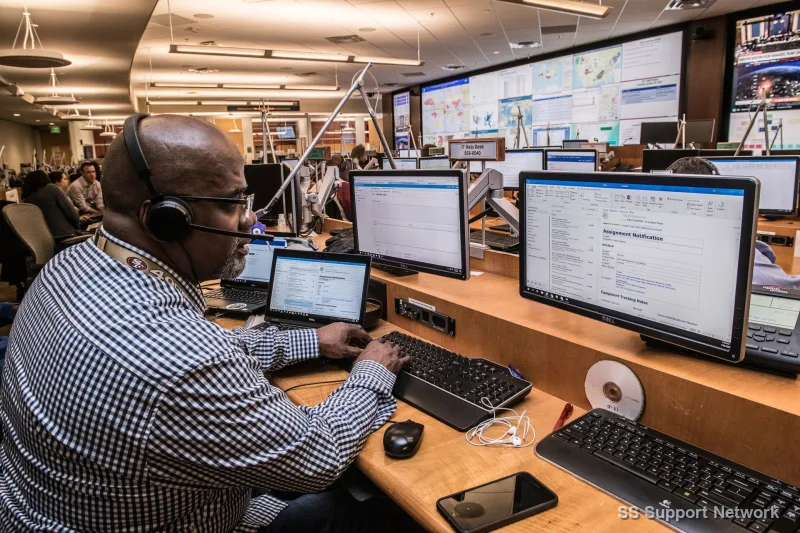
NEMT Dispatching
The full dispatch desk: assignments, live trips, exceptions and the day's manifest.
Learn more
Equipment Service Dispatch
Break-fix dispatch, PM scheduling and technician routing for equipment service teams.
Learn more
After-Hours Call Handling
The evenings and weekends when a late will-call has nowhere else to land.
Learn moreFree operations audit
See what your nights actually cost to staff
Tell us who carries the phone overnight now and how many calls arrive after hours. Within 1 business day you'll have a written coverage plan (triage matrix, escalation ladder, handover format and the cost) with no sales pressure.
Prefer to talk now? Call +1 (657) 777-0006 or WhatsApp us. We answer 24/7.