
NEMT Dispatch Support
Dispatch Call Answering, by People Who Can Act
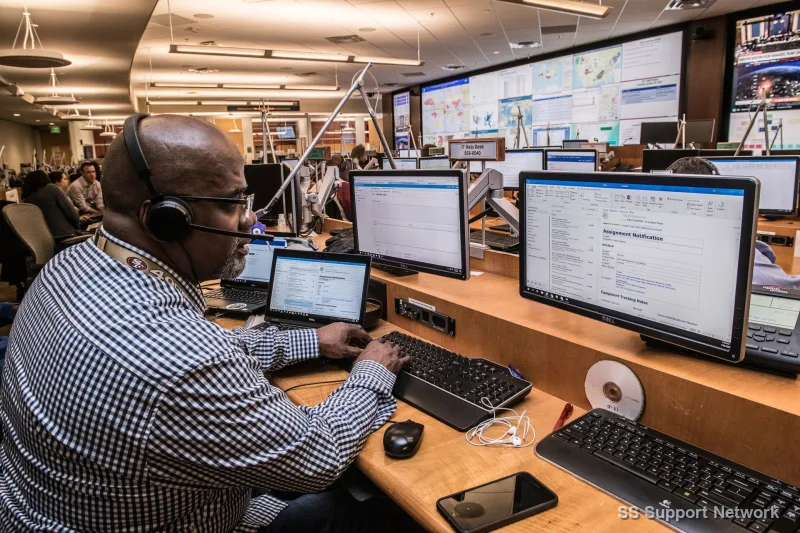
Your dispatch line is four conversations at once: a driver at a locked door, a clinic moving a pickup, a rider who is early, a broker adding a trip. We answer all of them, and we do something about each.

Answered and Acted On
Four kinds of callers hit a dispatch line: drivers, riders, facilities and brokers, and none of them wants a message taken. Dispatch call answering resolves the call instead of recording it, because agents sit inside your dispatch system: the driver reporting a locked door gets a decision, the facility moving a pickup gets the board changed, the broker adding a trip gets it assigned. For an NEMT fleet the dispatch line is the operation's single point of contention. Left unanswered, drivers idle, riders wait, and a problem two minutes wide grows into an hour. Billing runs hourly per agent, nights and weekends at the same rate.
Who is calling the dispatch line, and what do they need?
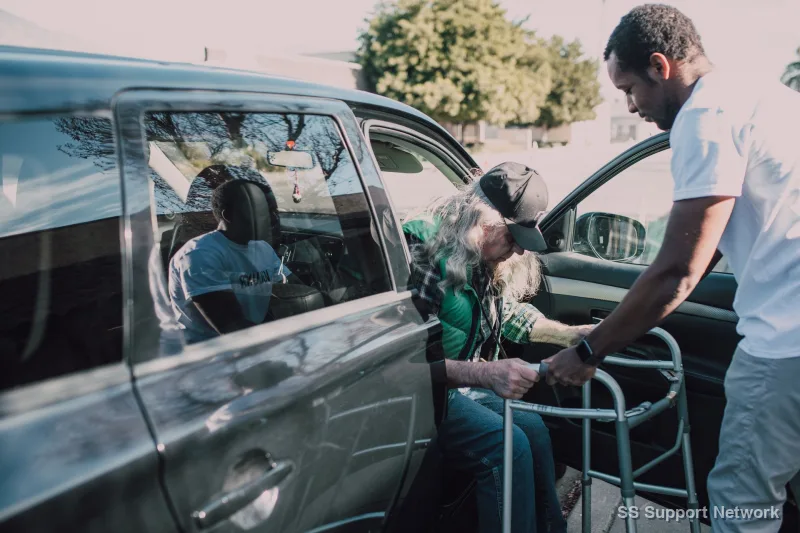
Drivers, most of all. A gate code that does not work, a rider who is not at the door, a lift that has stopped, a run that is going to be late. Every one of those is a decision waiting on somebody to pick up, and every minute it waits is a vehicle standing still.
Facilities and clinics, moving pickups and telling you about discharges. Riders and families, asking where the vehicle is or changing tomorrow. Brokers, adding trips, cancelling trips and asking why one ran late.
What they have in common is that none of them want a message taken. They want the thing resolved, and the difference between a dispatch line and an answering service is entirely whether the person who picks up can do that.
Drivers, and they are the expensive ones
A gate code that does not work, a rider who is not at the door, a lift that has stopped, a run that is going to be late. Every one of these has a vehicle standing still behind it, which is what separates them from every other call on the line. A driver waiting on a decision is not idle for the two minutes the decision takes; he is idle until somebody picks up, and every trip behind him moves later by the same amount.
Facilities and clinics
Moving a pickup, telling you about a discharge, asking where a vehicle is for a patient standing at their reception desk. These calls are relationship calls as much as operational ones: the coordinator on the phone is the person who decides whether your company is easy to work with, and they are comparing you against whoever they used before.
Riders and families
Where is my ride, and can I change tomorrow. Individually low-value, collectively a large share of the volume, and the calls most likely to be abandoned when the line is busy. They are also the ones that escalate furthest when unanswered, because a family who cannot reach you rings the broker instead, and that arrives on your desk as a complaint rather than as a question.
Brokers
Adding trips, cancelling trips, and asking why one ran late. These calls have a scoring consequence attached: what the desk does with an added trip touches your acceptance rate, and what it can evidence about a late run touches how the conversation goes. They are the calls where working inside your broker portals rather than beside them matters most.
What can the desk do without calling you?
Assign and reassign drivers, move pickup times, activate will-calls, mark trips en route, arrived, onboard and completed, log the reason a trip did not run, and answer the "where is my ride" call with a real answer rather than a promise to find out.
Handle the exceptions that have a written rule: a breakdown, a no-load, a rider who is not at the door after the agreed wait, a mobility mismatch discovered at the kerb. These are the calls that cost the most when they queue, and they follow a policy you set in advance rather than a judgment made under pressure.
And escalate the rest to you, on a path you define, which is a much shorter list than most operators expect once the routine decisions are written down.
Can you run the line alongside our own dispatchers?
Yes, and it is the most common arrangement. Your dispatchers keep the accounts and the relationships; we take the overflow, the second line, the lunch hour, the night, or the whole weekend. The board is shared, so there is no handover to write and nothing to reconcile.
Some fleets go the other way and hand us the line entirely while keeping one operations manager in-house to own escalations and broker relationships. Both work. What does not work is an arrangement where two teams are answering the same line from two different pictures of the day.
Every call is logged against the trip it concerns, so the record of why something happened lives with the thing it happened to, not in a call log nobody opens.
The authority matrix: what the desk decides, and what it brings to you
This is the document that actually determines whether outsourcing your dispatch line works. Most operators arrive expecting the escalation list to be long, and are surprised how short it becomes once the routine decisions are written down. We fill this in with you before go-live and revisit it as trust builds.
| The call | What the desk does by default | What you have to decide first |
|---|---|---|
| Driver at a locked door, no answer | What the desk does by defaultWait the agreed period, attempt the rider and the facility, then close the trip to your code | What you have to decide firstHow long the driver waits, who is called in what order, and the reason code used when it is abandoned |
| Rider not at the pickup point | What the desk does by defaultSame ladder, then release the driver to the next job rather than holding the run | What you have to decide firstThe wait time, and whether the driver waits longer for a treatment run than for a routine one |
| Mobility mismatch found at the kerb | What the desk does by defaultTrip held, correct vehicle identified from the board, rider and facility told | What you have to decide firstWhether a mismatch may be carried anyway when the difference is marginal, or never |
| Vehicle breakdown mid-run | What the desk does by defaultAffected trips re-planned across the remaining fleet, riders and facilities notified, you informed rather than consulted | What you have to decide firstWhether the desk may move trips between drivers without asking, which is the single biggest lever on how useful the desk is |
| Facility moves a pickup time | What the desk does by defaultBoard changed, driver notified, change logged against the trip | What you have to decide firstHow far a pickup may move before it needs your say-so |
| Broker adds a trip in the portal | What the desk does by defaultAccepted or rejected against your capacity and your acceptance rules, then assigned | What you have to decide firstYour acceptance rules. This is the one operators most often leave undefined, and it is the one that affects broker standing |
| Rider asks where the vehicle is | What the desk does by defaultAnswered from the board with a real time | What you have to decide firstNothing. This is the call the desk absorbs entirely, and it is a large share of the volume |
| Complaint, injury, or anything involving a patient's safety | What the desk does by defaultEscalated immediately, no judgment applied | What you have to decide firstWho is called, at what hour, and what the agent says to the caller in the meantime |
The pattern across every row is the same: the desk applies a policy you wrote in advance rather than making a judgment under pressure, and escalates rather than improvises where a call falls outside it. That is what makes a shared desk safe on somebody else's operation, and it is also why the setup conversation is longer than the technical one.
Why the exception calls are the ones that pay for the desk
Routine calls are cheap to lose. A rider asking about tomorrow rings back if nobody picks up. The calls that cost money are the ones with a vehicle stationary at the other end of them, and those have a property worth understanding: their cost grows while they queue.
A driver at a locked door with nobody answering the dispatch line is not idle for the two minutes the decision would have taken. He is idle until somebody picks up, and every trip behind him on that run moves later by the same amount. One unanswered exception call at nine in the morning is a run that finishes late at four in the afternoon, a broker on-time figure that dips for reasons nobody can reconstruct, and two riders who now think you are unreliable.
This is also why the pricing shape matters here more than on most services. A per-call price makes a busy afternoon more expensive precisely when the desk is worth most, which is an incentive pointing the wrong way for both of us. Hourly per agent means a bad afternoon costs you nothing extra, and gives us no reason to hurry a call that needs time.
On the ground
A growing fleet stopped losing its afternoons
A fleet that had grown from nine vehicles to twenty-six was still running one dispatcher, and by two in the afternoon the line was permanently engaged. Drivers were calling three times to get through and riders were ringing the broker instead. Adding a second answering desk on the same board took the queue out of the afternoon entirely. The in-house dispatcher kept the broker relationships and the difficult accounts; the volume calls stopped stacking, and broker complaints about unreachable dispatch stopped appearing in the monthly review.
What does dispatch call answering cost?
Hourly per agent, the same rate days, nights and weekends. No per-call fee, because a per-call price makes a busy afternoon more expensive precisely when you need the desk most.
Fleets usually start with coverage across their peak hours or their nights, then extend. A single seat commonly absorbs the call volume of a fleet running twenty to thirty vehicles, depending on how much exception work the contracts generate. Typical savings run 35-70% against fully loaded in-house cost (SS Support Network operations data).
Before you decide
Dispatch Call Answering, answered straight
It is the phone half of it. Full dispatching includes building the day, assigning the fleet and running the board; call answering is the live line for drivers, riders, facilities and brokers, resolved as it rings. Many fleets buy the answering first because it is where the pain is loudest, then move to full dispatch once they see the desk work.
Yes. Agents log into whatever you already run, your dispatch platform and your broker portals, so changes land where your drivers and your billing already look. If you have no system, we can run the board in our own operations platform and give you access to it.
They get a decision, immediately, rather than a message being taken about it. A locked door, a rider not at the pickup point, a failed lift, a mobility mismatch found at the kerb or a late run all follow a written policy you set in advance: how long the driver waits, who is called in what order, when the trip is abandoned, and which reason code closes it. The reason SS Support Network insists on writing this down before go-live is that an exception call keeps costing while it queues. A driver waiting on a decision is not idle for the two minutes the decision takes; he is idle until somebody picks up, and every trip behind him on that run slips by the same amount.
Whether the desk may move trips between drivers without asking you first. Fleets that grant it get a desk that re-plans a run around a breakdown while the vehicle is still on the hard shoulder; fleets that withhold it get a desk that phones the owner and waits, which on a bad morning is the same as having no desk. It is a genuine risk decision rather than an obvious one, so SS Support Network asks it explicitly during setup instead of assuming, and plenty of operators start with it withheld and grant it once they have read a few weeks of call records. The second most consequential rule is your broker trip-acceptance policy, which is the one most often left undefined and the one that quietly affects your standing with the broker.
Much shorter than operators expect, and it gets shorter over time. Most fleets arrive assuming they will need to be consulted constantly, then find that once the routine exceptions have written policies attached, what genuinely reaches them is complaints, injuries, anything touching a rider's safety, and decisions with a real cost attached. Everything else has a rule. SS Support Network reviews the matrix as your operation changes rather than freezing it at go-live, because an escalation list that never shrinks is a sign the policies were never written properly in the first place.
Yes: overflow, second line, lunch cover, nights and weekends are all normal arrangements. Because the board is shared there is no handover to write and nothing to reconcile. What we would steer you away from is two teams answering the same line from two different pictures of the day.
They should not see one, other than the line being answered. Agents work in your name and inside your broker portals, so trip updates, cancellations and reason codes land in the systems the broker actually audits. Where brokers notice a change it is usually in on-time performance and in complaints they stop receiving.
A straightforward fleet is usually live in two to three weeks. Most of that is learning your accounts, your brokers' rules and your exception policies. Porting a phone number takes days, but a desk that does not know what to do with a stranded rider is not yet answering anything useful.
Yes. Dispatch calls carry rider names, addresses, treatment locations and mobility needs, so agents complete HIPAA training before taking calls, work under role-based access, and follow your approved scripts. A Business Associate Agreement is signed with every client as standard.
Adjacent services
Upstream and downstream of this line

Free operations audit
Find out what your dispatch line is missing
Tell us roughly how many vehicles you run and when the line gets busiest. Within 1 business day you'll have a written coverage plan: hours, policies, escalation and cost, with no sales pressure.
Prefer to talk now? Call +1 (657) 777-0006 or WhatsApp us. We're on both 24/7.