
Practice Support
Optometry Answering Service
An optical practice phone carries three unrelated conversations: booking an exam, chasing a pair of glasses, and someone who has something in their eye. Only one of them can wait.

The Optical Phone, Handled Right
Two phone calls cost an optical practice more than any others: the retinal red flag booked eleven days out like a routine exam, and the routine refraction filed to the wrong carrier. Neither is obvious to an agent reading a generic script, which is why this answering service runs on a written protocol you author. Day to day it covers the calls the practice can't pick up live: eye exams booked into the right appointment type, glasses and contact lens order questions answered, vision and medical plan details captured, and the small number of genuinely urgent eye problems identified and routed. Billing is hourly per agent, with evenings and weekends at the same rate.
Three call types, one phone
Optical practices have an unusual call mix. A retail conversation about frames, a clinical conversation about an exam, and occasionally a genuine eye emergency all arrive on the same line, and the person answering has to tell them apart in the first ten seconds.
Most answering services handle the first two adequately and are dangerous on the third, because the script has no branch for it. Ours does, and it is written with you before we take a call.
What gets handled
- Exam booking: routine, contact lens fitting and follow-up, into your schedule with the right duration.
- Optical order queries: "are my glasses ready", lens options, warranty and remake questions, answered from your notes.
- Contact lens orders and reorders: captured and passed through, including the prescription-expiry check that catches an order you cannot fill.
- Vision and medical insurance: participation confirmed and plan details captured; we do not quote coverage.
- Urgent triage: sudden vision change, flashes and floaters, pain, trauma or chemical exposure escalated immediately by your rules.
Recall is where the revenue is
Optometry is a recall business. A patient seen two years ago and never called is a patient who will eventually go somewhere with a reminder system.
We run the recall calls alongside answering, which works better than treating them as a separate campaign, because the patient who returns the call reaches the same desk that rang them.
The sequence of an urgent eye call
Roughly one call in a hundred is this one. It is the reason an optometry phone cannot be handed to a general answering service, and it runs the same way every time.
- 1
Do not lead with "does it hurt?"
This is the instinctive question and it is actively misleading in ophthalmic triage, because retinal detachment and retinal tear are usually painless. A caller who says no when asked about pain has just given an answer that means nothing, and a script that branches on it will route a detaching retina to next Tuesday. Our agents ask about vision change first, then pain, in that order, because that is the order that separates the calls.
- 2
Ask the four questions that matter
Is anything different about the vision itself, and did it start suddenly. Are there new floaters, and are there many of them at once rather than one or two. Are there flashes of light. Is there a shadow, curtain or dark area anywhere in the field. Those four, asked plainly, are what your protocol keys on. The agent records the answers in the caller's own words rather than paraphrasing them into clinical language.
- 3
Treat trauma and chemical exposure as their own branch
Blunt or penetrating injury and any chemical splash bypass the booking logic entirely. They do not get triaged against symptom questions, because the answers do not change what happens next. Your protocol names the destination and the agent goes straight there.
- 4
Escalate on your list, and record the attempt
An ordered contact list with a time limit on each step, a written fallback if nobody answers, and a timestamp on every attempt. The agent does not decide the caller is fine because the third number rang out.
- 5
Book the non-urgent ones properly
Everything that is not a red flag still has to land in the correct slot. A comprehensive exam, a contact lens fitting, a follow-up and a medical office visit are different appointment types with different lengths, and booking one into another's slot costs the practice the visit twice: once when the lane runs over, and again when the claim goes to the wrong carrier.
Agents do not assess eyes, do not offer an opinion on what a symptom means, and do not tell a caller whether something is serious. They ask your questions, record the answers verbatim, apply your routing rule, and escalate rather than decide whenever a description sits near a boundary.
Vision plan or medical plan: the question the front desk gets wrong
An optical practice bills two entirely different kinds of payer, and which one applies is decided by why the patient is coming in, not by what is done in the lane. Vision plans such as VSP and EyeMed cover the routine refractive visit and the eyewear that follows it. Medical carriers cover the visit when a symptom or a diagnosis is driving it, and they do not pay for the refraction or the contact lens evaluation even when those happen at the same appointment.
The rule the industry works to is the chief complaint. VSP's own policy guidance puts it plainly: a patient with no medical problems, reporting no medically related symptoms, who says they are there to renew a glasses prescription, is a routine visit and goes to the routine carrier. A patient calling because something has changed is not, even if they also want new glasses.
That distinction is made on the phone, before the patient arrives, by whoever books the appointment. Get it wrong and the practice either bills the wrong payer and reworks the claim, or books a medical complaint into a routine slot that has no time in it for the workup. So we ask the question at booking, capture both carriers where the patient carries both, and flag the call for your team when the answer is genuinely ambiguous. What we do not do is decide the visit type ourselves or tell the patient what will be covered.
What actually arrives on an optical practice phone
Five call types, what the desk has to capture on each, and the specific way each one goes wrong. This is the table we build your script from.
| The call | What we capture | How it goes wrong |
|---|---|---|
| "I need an eye test" | What we captureReason for the visit, any symptoms, both carriers, last exam date | How it goes wrongBooked as routine when a symptom is driving it, so the lane runs over and the claim goes to the wrong payer |
| "Are my glasses ready?" | What we captureOrder reference, answered from your order notes | How it goes wrongLeft to your dispensing staff, who are with a patient; it is high-volume, low-value and the single easiest call to move off the desk |
| Contact lens reorder | What we capturePrescription on file and whether it is still in date | How it goes wrongOrder taken against an expired prescription, discovered later; contact lens prescriptions run a minimum of one year under the FTC Contact Lens Rule unless a shorter date is documented |
| Prescription verification from an online seller | What we capturePatient, prescription, response logged against the request | How it goes wrongIgnored as junk. Under the FTC Contact Lens Rule a prescriber has 40 business hours to respond to a verification request, and silence lets the sale proceed anyway |
| Sudden vision change, flashes, floaters or a shadow | What we captureThe four screening answers verbatim, then immediate escalation | How it goes wrongOffered the next free appointment, because the caller reported no pain and the script asked about pain |
What does optometry answering cost?
Hourly per agent, with no per-call or per-minute charge, no setup fee, and the same rate on evenings, weekends and public holidays. Per-call pricing is common in this market and it bills you most in the month your phone is busiest, which is the month the coverage was worth having. Hourly pricing removes any incentive we might otherwise have in how long a call runs.
Most practices start with overflow and after-hours only, which is also the easiest thing to justify: your phone system already reports abandoned calls, and in an optical practice they cluster in dispensing hours when the desk is at the frame board rather than the phone. Typical savings run 35-70% against fully loaded in-house cost (SS Support Network operations data). Published rates are on the pricing page, and the savings calculator runs the comparison on your own wage figures.
Case in point
The call that should never have been offered an appointment
A practice reviewing its answering-service transcripts found a caller describing a curtain across their vision who had been offered the next available exam, eleven days out. Nothing went wrong in that instance, which is the only reason it was found at all. The script had no branch for urgency, and nobody had noticed because the service had never been asked to have one.
What callers ask
Optometry answering, answered straight
By a protocol your practice writes before SS Support Network takes a call. Sudden vision loss or change, a new shower of floaters, flashes, a shadow or curtain in the field, trauma and chemical exposure all escalate immediately. The screening deliberately does not lead with pain, because retinal tears and detachments are usually painless, so a caller answering no to "does it hurt" tells you nothing useful. We do not assess the eye; we ask your questions, record the answers verbatim, and err toward escalating.
Yes. SS Support Network agents log into the practice management system you already run and book there directly, using the correct appointment type and duration. A comprehensive exam, a contact lens fitting, a follow-up and a medical office visit are different lengths and are not interchangeable slots, so booking one into another's place costs you the lane time and often the claim as well.
Yes, from your order notes. It is a large share of optical call volume and it is exactly the call that stops your staff from serving the person in front of them.
SS Support Network confirms whether your practice participates with the plan and captures the plan details, including both carriers where a patient holds vision and medical cover. We do not quote benefits or estimate what a patient will pay, because a wrong number given on the phone becomes an argument at the dispensing table, and your staff are the ones who have it.
We do not decide it; we ask the question that lets your practice decide, and we capture the answer at booking. The industry rule turns on the chief complaint: a patient with no symptoms who says they are there to renew a glasses prescription is a routine visit for the vision plan, while a patient calling because something has changed is a medical visit even if they also want new glasses. SS Support Network agents ask why the patient is coming in, record it, capture both carriers where they exist, and flag genuinely ambiguous calls for your team rather than guessing.
Yes, and they are worth handling properly rather than letting them pile up. Under the FTC Contact Lens Rule a prescriber has 40 business hours to respond to a verification request from a seller, and a request that goes unanswered is treated as verified, so the sale proceeds regardless. SS Support Network logs each request against the patient, routes it to whoever in your practice is authorised to confirm or reject it, and tracks the clock so the decision is yours rather than made by default.
SS Support Network prices optometry answering hourly per agent, with no per-call or per-minute component, no setup fee, and no premium for evenings, weekends or public holidays. Published rates are on the pricing page, and typical savings run 35-70% against fully loaded in-house cost (SS Support Network operations data).
Yes, and we recommend it. Recall is the main growth lever in optometry and it is the first thing dropped when the front desk is busy.
Always, with your greeting.
Yes. Overflow and after-hours only is the most common arrangement, and the easiest to justify from your existing call logs.
Something here we did not cover? Call +1 (657) 777-0006, 24/7.
More like this
Neighboring services for optical practices
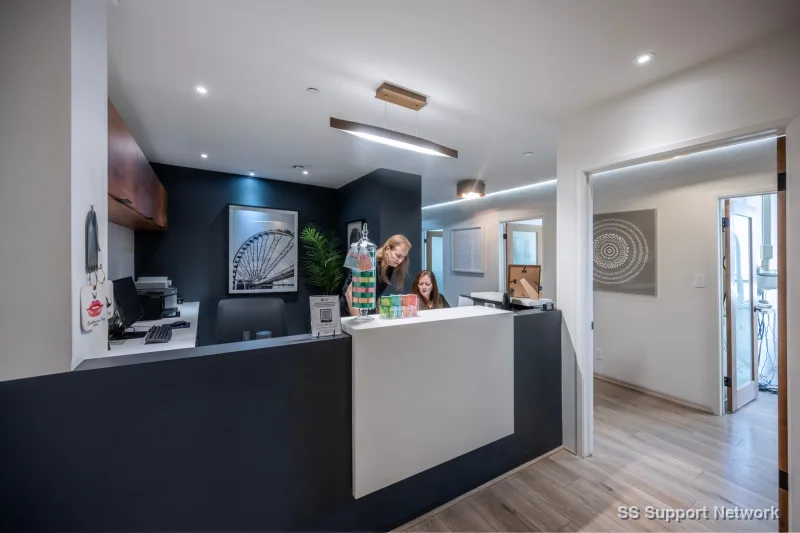
Dental Call Center
New patient calls answered live, plus scheduling, recall and no-show follow-up.
Learn more
Patient Scheduling
Same-day slots and reservations booked, confirmed, and followed up on.
Learn more
Medical Answering
After-hours on-call handling that reaches your provider only when protocol says so.
Learn moreFree operations audit
Find out which calls your desk is not reaching
Tell us roughly how many exam lanes you run and who answers while the desk is dispensing. Within 1 business day you'll have a written coverage plan (hours, the urgency protocol we would work to, and the cost) with no sales pressure.
Prefer to talk now? Call +1 (657) 777-0006 or WhatsApp us. We answer 24/7.