If you run an NEMT company, you have probably been told you need EVV. Vendor guides say it, sales calls say it, and some of them get it flatly wrong. The honest answer is narrower and more useful than the scare-copy suggests.
EVV is not a law that governs your trips. But trip verification absolutely governs whether you get paid. This guide separates the two so you know exactly what you must do, and where the requirement actually comes from. It reflects what our team works across broker portals every day inside our NEMT dispatch and NEMT call center operations.
Is EVV required for NEMT?
No. There is no federal law that requires Electronic Visit Verification for non-emergency medical transportation. The EVV mandate people cite comes from the 21st Century Cures Act, and that mandate names two services. Neither of them is transportation.
So when a vendor tells you "NEMT requires EVV," they are borrowing a home-care term and applying it where the statute does not reach. The confusion is understandable, because your broker probably does make you use a GPS app that looks and feels like EVV. That requirement is real. It just isn't the Cures Act.
The distinction matters for one practical reason: knowing where a rule comes from tells you who can change it, who enforces it, and what happens if you miss it. For NEMT, that authority is your broker contract, not a federal EVV statute.
What does the 21st Century Cures Act actually require?
Section 12006 of the 21st Century Cures Act requires states to implement EVV for two Medicaid service categories. Personal Care Services, with compliance phased from January 1, 2020 (with good-faith-effort extensions), and Home Health Care Services, phased from January 1, 2023. NEMT is not in scope of either one. You can read the statute itself: the requirement sits at 42 U.S.C. 1396b(l), which also sets out the reductions to a state's federal Medicaid match if it misses the deadlines.
EVV for those mandated services captures six data points on each visit: who received the service, who provided it, what service was performed, where it happened, and the date plus start and stop times. This is a home-care model, built around a caregiver arriving at a member's home.
That model simply does not map onto a vehicle trip. A ride has a moving pickup point, a route, and a drop-off, not a caregiver standing at a fixed address. Trying to force NEMT into a six-point caregiver-visit form is one reason the "EVV for NEMT" framing causes so much confusion.
Then why does my broker make me use an EVV-style app?
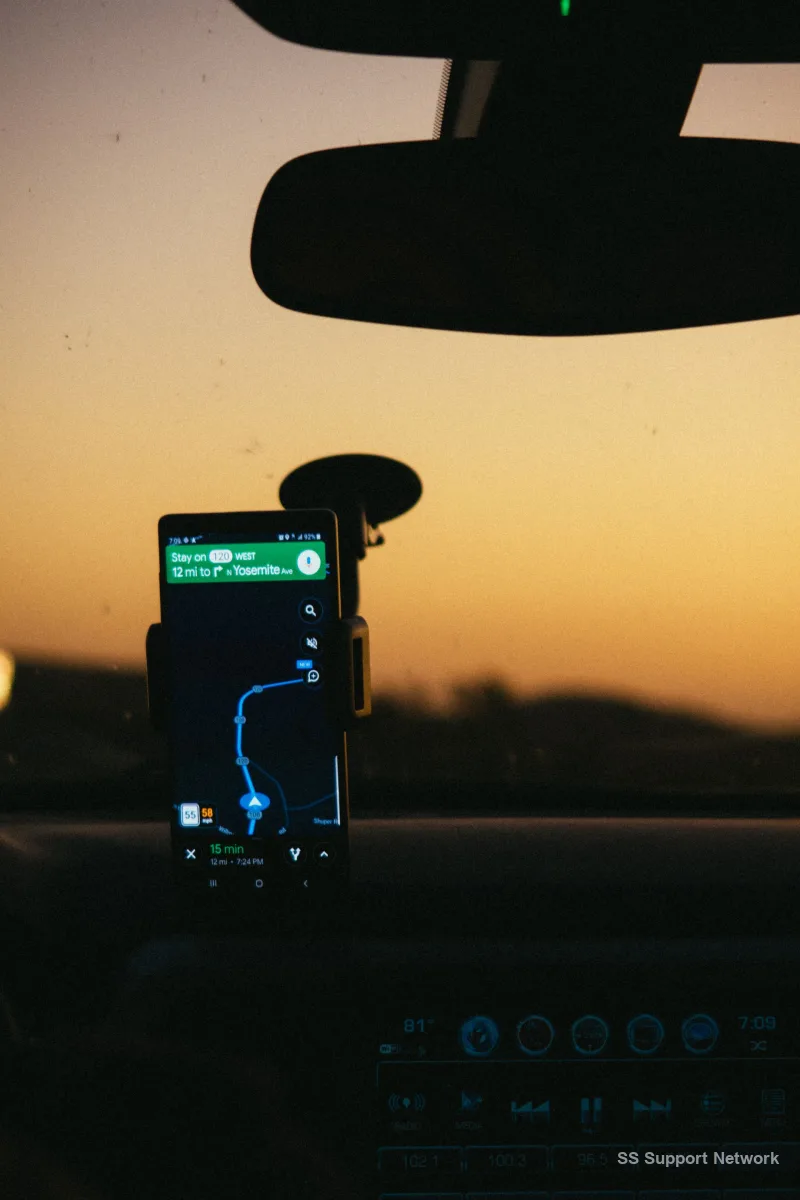
Because brokers enforce their own trip verification, and it is a condition of getting paid. Modivcare and MTM (and platforms such as MTM Link) require GPS-enabled mobile apps that log GPS-stamped pickup and drop-off locations and times, capture a rider signature or electronic confirmation, and often record odometer or mileage.
This is contractual, not statutory. It lives in your broker agreement and their claim rules, which means the broker sets the standard and the broker enforces it. Miss the required verification and the trip can be denied. The ride happened, but without the proof the payment rules demand, it may not pay.
SS Support Network is an independent support provider, not affiliated with or endorsed by any broker or state Medicaid agency.
Not sure your trip verification holds up to broker claim rules?Free operations audit, with a written plan within 1 business day.
Get My Free AuditHow is NEMT trip verification different from home-care EVV?
They look similar on the surface, since both use apps, GPS, and timestamps, but they answer to different authorities and capture different things. If you only remember one table from this article, make it this one.
| Home-care EVV | NEMT broker trip verification | |
|---|---|---|
| Legal basis | 21st Century Cures Act mandate | Broker contract |
| What's captured | Six caregiver-visit data points | GPS pickup/drop-off + signature + mileage |
| Who requires it | State Medicaid program | The broker |
| Penalty for missing | State compliance action | Claim denial |
Notice that no row for NEMT points back to a statute. Every NEMT obligation traces to a contract and a claim rule. That is the whole myth in one line: the app is real, the discipline is real, but the law being cited is the wrong one.
It is also worth stressing what the table does not say. None of the largest NEMT states (New York, California, Texas, Florida, Georgia, Ohio, Pennsylvania, Illinois, North Carolina, or New Jersey) impose a statutory EVV mandate on NEMT. Their state EVV programs, including Sandata rollouts, cover home health, personal care, and HCBS. NEMT is not a named EVV category in those programs.
What should NEMT providers do to stay compliant and get paid?
Treat trip verification as a billing-integrity habit, not a legal box to check. The goal is the same either way (provable trips), but framing it as a payment requirement keeps the focus where it belongs.
Follow each broker's app and verification rules exactly, because they differ from broker to broker. Capture GPS, a rider signature or electronic confirmation, and mileage on every leg, not just the first ride of the day. Keep those records so a claim can be defended if it is questioned or appealed.
This is general operational information, not legal advice. Requirements shift by broker and by state, so confirm current requirements with your broker and state Medicaid program before you change a workflow. If disciplined trip verification is slipping under dispatch pressure, our NEMT back office handles it as part of the paid-claim process, and if you want to see where EVV genuinely is mandated, read our companion guide on EVV for home care, where it IS mandated.
For the day-to-day mechanics that surround verification, our NEMT dispatching guide and our breakdown of common NEMT billing mistakes cover the habits that keep trips paying.
Frequently asked questions
Is EVV required for NEMT?
No. There is no federal mandate requiring Electronic Visit Verification for non-emergency medical transportation. What NEMT providers experience as EVV is broker GPS trip verification, required by contract: brokers like Modivcare and MTM make you log GPS-stamped pickup and drop-off through their mobile apps to get the trip paid.
Does the 21st Century Cures Act cover NEMT?
No. The Cures Act EVV mandate in Section 12006 applies only to Medicaid Personal Care Services and Home Health Care Services. It is a home-care rule built around a caregiver visiting a member, and NEMT transportation is not in its scope.
What is broker GPS trip verification?
It is the trip proof brokers enforce through their own GPS-enabled mobile apps, such as Modivcare and MTM platforms like MTM Link. It captures GPS-stamped pickup and drop-off locations and times, a rider signature or electronic confirmation, and often odometer or mileage. It is a contract requirement tied to getting the trip paid.
Do any states mandate EVV for NEMT?
None of the largest NEMT states (New York, California, Texas, Florida, Georgia, Ohio, Pennsylvania, Illinois, North Carolina, or New Jersey) impose a statutory EVV mandate on NEMT. Their state EVV programs, including Sandata rollouts, cover home health, personal care, and HCBS, not transportation.
What happens if I skip trip verification?
The broker can deny the claim. Trip verification is a payment requirement, not just paperwork. Miss the GPS, signature, or mileage the broker contract requires and the trip can be denied. Weak trip documentation is a top denial cause.